Selecting the right fastener plays a critical role in mechanical integrity. It determines how long structural assemblies last. It also dictates how efficiently modern production lines operate. A seemingly simple hardware choice often impacts the long-term maintenance needs of heavy machinery. Proper selection prevents catastrophic field failures.
Engineers and procurement teams frequently face a practical dilemma. They must decide whether to rely on a standard bolt-and-washer assembly or transition to a unified flange design. Making the wrong choice causes significant issues. You might experience loosened joints. You could damage softer mating materials. You might even inflate manufacturing timelines unnecessarily.
This guide provides an objective technical evaluation of standard fasteners compared to flange options. We will explore load distribution principles. We will analyze assembly efficiency metrics. We will also outline physical structural constraints. You will learn how to evaluate these specific components. This knowledge helps you make cost-effective, application-appropriate decisions for your next major project.
Key Takeaways
- Structural Difference: A flange hexagonal bolt integrates a washer-like skirt directly into the bolt head, whereas a normal hex bolt requires a separate washer to achieve similar load distribution.
- Performance: Flange bolts provide a larger, more consistent bearing surface, reducing the risk of material crushing and loosening under vibration.
- Operational Efficiency: Eliminating separate washers speeds up assembly times, reduces dropped-part errors on production lines, and simplifies inventory management.
- Application Constraints: Normal bolts remain necessary for tight-clearance applications, recessed holes, or when specialized, dissimilar washer materials (e.g., copper, nylon) are required.
Structural Anatomy: Flange Hexagonal Bolt vs. Standard Hex Bolt
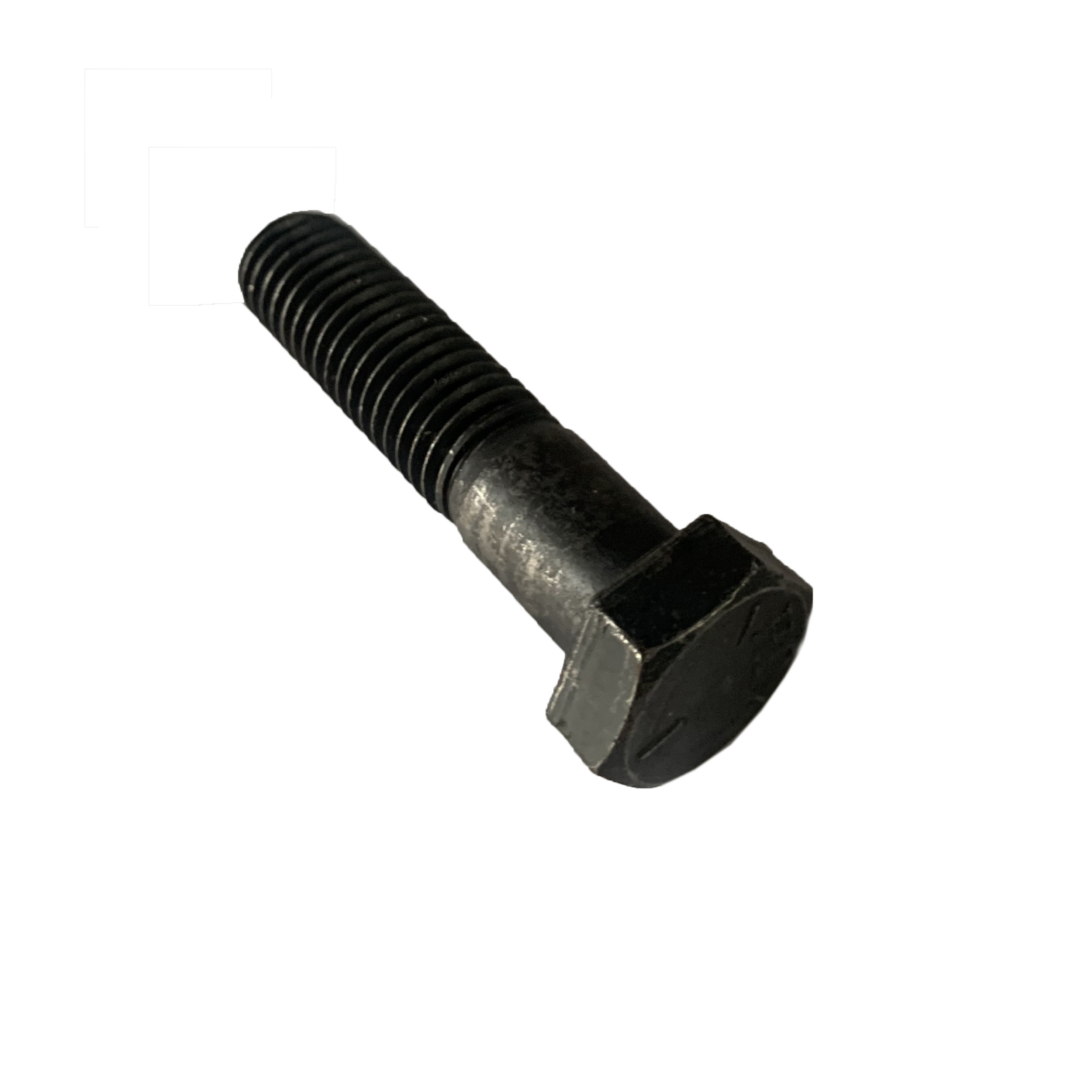
We must define the normal hex bolt first. This standard fastener uses a basic six-sided head. Mechanics turn this head using common wrenches or sockets. The design relies entirely on the flat underside for surface contact. This small flat area presses directly against the mating material. Engineers rarely use standard hex bolts alone in structural applications. They almost always require secondary components. You typically pair them up. Mechanics add flat washers to modify load distribution. They add lock washers to maintain joint tension.
A Flange Hexagonal Bolt operates differently. It features a built-in flared collar. We call this flared section the flange. It sits exactly at the base of the hex head. Manufacturers forge this entire component as a single solid piece. You will encounter two primary flange styles. They can be smooth or serrated. Smooth flanges act primarily as load distributors. They spread clamping pressure widely. Serrated flanges feature angled teeth underneath. These teeth bite into the mating material. They resist backing out under severe vibration.
This unified design alters torque transfer significantly. Standard assemblies use multiple loose pieces. Energy transfers from the wrench to the head. It then moves into the loose ring. Finally, the ring presses against the base material. Every transfer point introduces sliding friction variables. Unified designs eliminate this unpredictable middle layer. Force travels directly from the head to the joint. Single-piece forging creates a rigid connection. It prevents bending stresses common in separate loose parts. Uninterrupted grain flow through the forged collar ensures superior physical strength.
Load Distribution and Clamp Force Reliability
We must understand bearing stress to select proper fasteners. Clamping force usually concentrates around the threaded hole. A wider collar diameter disperses this force broadly. It reduces localized bearing stress dramatically. This broad dispersion protects softer mating materials. Aluminum engine blocks benefit greatly. Plastic housings avoid cracking under heavy pressure. The wider footprint prevents "pull-through" damage. It stops surface galling during final installation.
Vibration resistance matters deeply in dynamic environments. We see this constantly in automotive chassis design. Heavy machinery experiences similar cyclic loading. The built-in collar actually plays a crucial role here. Separate loose pieces can deform over time. They shift out of alignment easily. They lose tension under continuous cyclic loading. A solid collar maintains uniform clamp load continuously. It resists structural fatigue much better than loose assemblies.
| Load Attribute | Standard Hex Assembly | Unified Flange Design |
| Bearing Area | Variable depending on the selected separate ring. | Fixed, mathematically optimized during forging. |
| Vibration Response | Prone to micro-shifting and eventual tension loss. | Highly stable. Serrated options lock into place. |
| Material Protection | Moderate. Loose rings can still gouge surfaces. | Excellent. Smooth flanges prevent surface galling. |
Eliminating friction variables improves tightening predictability. Torque-to-yield calculations become highly reliable. Every loose ring adds unpredictable sliding friction. This friction consumes applied tightening energy. Less energy converts into actual clamping stretch. Unified designs remove these sliding surfaces entirely.
- You achieve the desired bolt stretch accurately.
- Engineers calculate torque targets more confidently.
- Quality control teams measure installation tension easily.
- Field technicians avoid under-tightening critical structural joints.
Assembly Efficiency and Production Realities
Production facilities prioritize assembly line throughput heavily. Operators save precious seconds on every single unit. They skip manually marrying loose rings to threads. Threading operations happen almost instantly. Handling errors drop significantly across the factory floor. Workers stop forgetting secondary components entirely. They stop installing conical rings upside down. They avoid grabbing the wrong thickness from sorting bins. These small time savings compound over thousands of units.
Blind spots present a practical reality for mechanics. They reach deep into cramped engine bays constantly. They stand on elevated platforms to fix aerospace frames. Dropping a loose metal ring causes major production delays. It introduces serious Foreign Object Debris (FOD) risks. Missing hardware destroys machinery moving parts rapidly. A unified fastener eliminates this exact dropping hazard. You hold one piece instead of two. You secure the joint faster.
Procurement departments see immediate supply chain advantages. Buyers order one single part number. They previously ordered three separate part numbers. Facilities stock fewer individual SKUs in tool cribs. Inventory management becomes much simpler. Counting stock takes less time during audits. Purchasing managers consolidate their vendor lists effectively.
- Ordering: Track one SKU instead of a bolt, flat washer, and lock washer.
- Storage: Free up valuable bin space in distribution centers.
- Kitting: Reduce time spent bagging multi-part hardware kits for end-users.
- Auditing: Simplify annual inventory counts by eliminating small loose parts.
Decision Framework: When to Choose Which
Automotive manufacturing relies heavily on unified designs. Aftermarket suspension work utilizes them daily. High-volume assembly lines use them to hit aggressive KPIs. Applications spanning oversized holes require them. Slotted holes need the extra coverage area. A standard narrow head would simply slip through.
Tight clearance issues block wide collars easily. Recessed channels reject them during installation. Counterbored holes require standard narrow heads. Tight corners prevent wrench access for wide bases. You must stick with standard designs here.
Material isolation dictates standard bolt usage sometimes. You might need dielectric isolation for electrical panels. You use sealing copper rings for fluid lines. You employ nylon dampeners for fragile plastics. A steel base cannot replace these specialized materials. You must use separate components for these specialized jobs.
Extreme high-strength applications present another physical constraint. Specific structural grades are sometimes scarce. They remain easier to find in standard heavy formats. Engineers often revert to standard heavy profiles for major bridge building. They source available standard inventory to meet deadlines.
| Application Scenario | Recommended Fastener | Primary Reason |
| Automotive Chassis Assembly | Flange Design | High vibration resistance and rapid factory installation. |
| Recessed Counterbored Holes | Standard Hex | Wide collars physically cannot fit inside narrow channels. |
| Electrical Panel Isolation | Standard Hex | Requires specialized non-conductive nylon washers. |
| Oversized or Slotted Brackets | Flange Design | Wide collar bridges gaps safely without pulling through. |
Procurement Considerations and Implementation Risks
Unit cost comparisons often mislead purchasing teams. Unified options carry a higher individual price tag. However, the overall installation expense usually drops. We calculate direct labor savings first. We subtract the eliminated component costs next. We reduce material handling expenses overall. Overall financial efficiency improves dramatically at high volumes. Evaluating purely on per-piece pricing ignores factory floor realities.
Engineers must check specific standardization documents always. ISO and DIN standard 6921 dictate precise dimensions. Base widths vary slightly between different manufacturers. Different regional standards allow minor tolerance shifts. Always verify technical drawings before ordering bulk shipments. Do not assume all collars share exact mathematical diameters. Verification prevents costly line stoppages later.
Surface finish dictates specific design choices heavily. We issue a strong warning regarding serrated options. Serrated teeth strip protective paint during tightening. They destroy galvanized coatings instantly. This exposes bare metal to environmental moisture. Galvanic corrosion accelerates rapidly in these exposed areas. Specifying serrated options on coated surfaces causes early failure. Use smooth bases to protect painted assemblies.
Best Practices and Common Mistakes
- Best Practice: Use smooth collars on soft aluminum components to prevent surface galling.
- Best Practice: Specify serrated collars strictly for bare-metal, high-vibration applications.
- Common Mistake: Ordering flanged hardware for deeply counterbored holes. They will not fit.
- Common Mistake: Using serrated hardware on powder-coated brackets. You will destroy the coating.
Conclusion
Flange options are not a universal replacement for standard fasteners. They serve as a powerful optimization tool for specific structural challenges. They reduce part counts on high-speed assembly lines. They distribute clamping forces evenly across softer materials. However, tight clearances and dissimilar material needs still require standard hardware assemblies.
We encourage buyers and engineers to audit their current bill of materials. Identify high-volume assemblies inside your operations. Switching to a unified design could reduce your labor costs significantly. It improves overall joint reliability in the field. Consult a fastener specialist for precise load calculations. Request physical samples for rigorous prototype testing before full implementation.
FAQ
Q: Can a flange bolt completely replace a bolt and washer?
A: Yes, in most structural load-bearing scenarios. However, it cannot replace washers meant for sealing fluids or providing electrical insulation.
Q: Are serrated flange bolts better than non-serrated?
A: They serve different purposes. Serrated flanges act as a locking mechanism against vibration but will mar the surface. Non-serrated flanges are strictly for load distribution without surface damage.
Q: Why not use flange bolts for everything?
A: Physical space limitations prevent their use in tight counterbores. They have higher upfront unit costs for low-volume runs. Also, you face the inability to use specialized washer materials like rubber or nylon.
Q: Do flange bolts require different torque specs?
A: Yes. Because the under-head friction area is larger, achieving the same bolt stretch may require a slightly different torque value compared to a standard hex bolt. Always refer to engineering charts.


