Securing structural joints under high vibration or heavy load constraints presents a massive engineering challenge. You must carefully balance clamping force against the risk of slowing down rapid assembly lines. Traditional fastening methods often force engineers into a difficult compromise between production speed and joint security.
Enter the integrated solution designed to solve this exact bottleneck. A Flange Hexagonal Bolt distributes clamping loads efficiently while completely eliminating the need for separate washers. This unified design inherently improves assembly line throughput and dramatically reduces component counts.
However, choosing the proper fastener involves much more than simply picking a standard size. You must carefully evaluate specific torque requirements, material compliance factors, and hidden application risks. Understanding these crucial engineering nuances ensures robust, failure-free joint connections across your entire project.
Key Takeaways
Structural Advantage: A flange hexagonal bolt integrates a washer-like base to distribute clamping force over a wider area, reducing damage to the mating surface.
Assembly Efficiency: Eliminating separate washers accelerates assembly times and reduces inventory part counts, lowering overall procurement costs.
Design Variations: Available in serrated (for vibration resistance) and non-serrated (for smooth bearing surfaces) profiles to match specific engineering needs.
Evaluation Criteria: Correct specification relies on matching material grade, thread pitch, and environmental resilience (e.g., stainless vs. zinc-plated) to the application load.
The Mechanics of a Flange Hexagonal Bolt
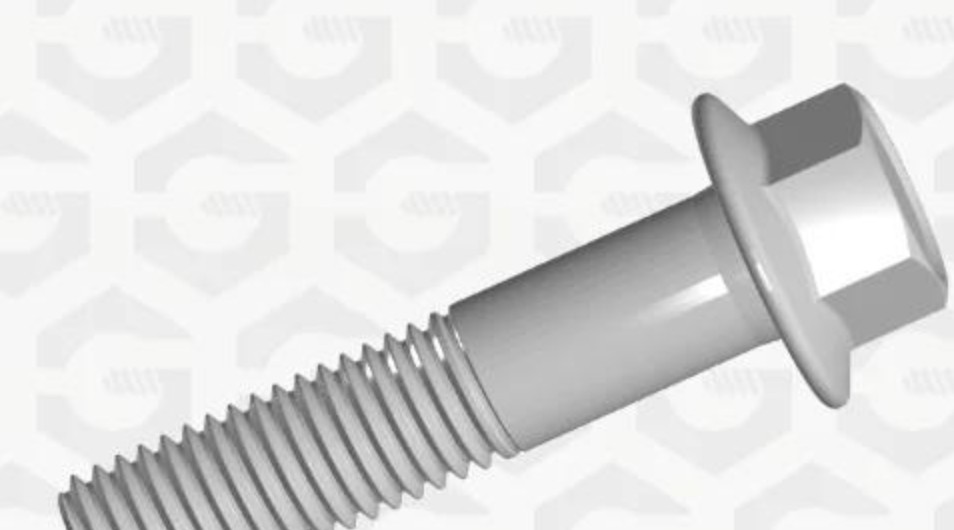
To fully appreciate the utility of a Flange Hexagonal Bolt, we first need to break down its physical construction. Standard fasteners rely on auxiliary parts to function properly in high-stress environments. Conversely, this specific fastener type incorporates multiple functional elements into a single piece of machined or cold-forged metal. We can divide its anatomy into three primary components.
The Hexagonal Drive Head: This upper section provides the standardized geometry required for wrenches and sockets. It allows for reliable torque application without stripping the drive surface.
The Integrated Flanged Base (Skirt): Situated immediately below the drive head, this flared section acts as a built-in washer. It permanently attaches to the head, ensuring it never slips, misaligns, or falls off during installation.
The Threaded Shank: This lower cylindrical portion contains the machine bolt profile. It interfaces directly with a tapped hole or a matching nut to create the final joint tension.
The integrated base dramatically alters the load distribution physics of the joint. When you tighten a fastener, you create tension within the shank. This tension pulls the bolt head down against the mating material. Pressure equals force divided by area. Because the built-in skirt increases the bearing surface area, it significantly lowers the bearing stress on the clamped material. This physical trait prevents the bolt head from crushing or pulling through softer metals and plastics.
Manufacturers produce these fasteners in two distinct under-head profiles: serrated and non-serrated. Serrated versions feature angled teeth cut into the bottom of the skirt. As you torque the fastener down, these teeth bite into the mating surface. The biting action firmly prevents counter-clockwise rotation. It acts as an aggressive, highly effective anti-vibration locking mechanism. On the other hand, non-serrated versions feature a perfectly flat bottom. They provide a smooth, uniform clamping force. You should specify non-serrated options for applications where surface scratching, gouging, or galling presents a severe risk to the assembly.
Standard Hex Bolt vs. Flange Bolt: Evaluation Framework
Engineers constantly face the "washer dilemma" during the drafting phase. The traditional approach requires combining a standard hex bolt, a flat washer, and a lock washer. This three-part combination historically provided adequate load distribution and basic vibration resistance. However, substituting this bulky assembly for a single integrated fastener offers profound operational and mechanical advantages.
Consider the operational efficiency of your production environment. Manual assembly operators waste precious seconds fumbling with loose washers. They drop them. They install them backward. They forget them entirely. Automated assembly lines also struggle, requiring complex feeding mechanisms to align multiple small components. By switching to an integrated design, operators handle one part instead of three. You eliminate the fumble factor. This streamlined approach vastly accelerates assembly times and heavily reduces the likelihood of operator error.
Comparison Chart: Fastener Assembly Methods
Feature
Standard Hex Bolt + Washers
Integrated Flange Bolt
Part Count
Three separate pieces per joint
One unified piece per joint
Assembly Speed
Slower (requires alignment)
Fast (drop-in ready)
Vibration Resistance
Moderate (relies on split-ring spring)
High (utilizes serrated under-head)
Inventory Complexity
High (must stock matching sizes)
Low (single SKU management)
Despite these clear advantages, we must acknowledge specific performance limitations. Standard hex configurations remain preferable in certain mechanical scenarios. For instance, if your design requires deep counterboring to recess the fastener head flush against the surface, the wider skirt profile will not fit. Furthermore, extreme load requirements on highly compressible materials might dictate the use of an oversized fender washer. The built-in skirt diameter has hard manufacturing limits. In cases needing massive load dispersal across weak substrates, traditional loose washers still hold structural value.
Material Specs and Environmental Compliance
Selecting the correct structural geometry solves only half of the engineering equation. You must also match the fastener metallurgy to the operating environment. Ignoring environmental compliance leads to rapid corrosion, hydrogen embrittlement, or catastrophic shear failure. Various metal alloys and protective platings address these exact operational hazards.
Stainless steel offerings dominate marine, outdoor, and food-grade applications. Austenitic grades like 304 and 316 provide exceptional, innate corrosion resistance without needing secondary coatings. The chromium within the steel forms a passive oxide layer, healing itself if scratched. However, stainless steel carries a distinct mechanical trade-off. It generally exhibits lower yield and tensile strength compared to hardened carbon equivalents. You cannot simply swap a high-strength carbon fastener for a stainless one without recalculating your joint preload capabilities.
For heavy machinery, automotive chassis, and structural steelworks, high-tensile carbon and alloy steels remain mandatory. Engineers specify these materials using strict grading systems, such as SAE Grade 8 or Metric Class 10.9. These hardened components withstand immense sheer forces and massive tensile stretching. They safely secure internal engine components and high-impact suspension linkages. Since raw carbon steel rusts rapidly, manufacturers apply various protective coatings.
Common Plating and Coating Specifications
Coating Type
Corrosion Resistance
Impact on Thread Tolerance
Torque-Tension Alteration
Plain / Black Oxide
Low (requires continuous oiling)
Minimal to none
Standard friction baseline
Zinc-Plated (Clear/Yellow)
Moderate (sacrificial anode)
Slight increase in thickness
Lowers friction; requires torque adjustment
Hot-Dip Galvanized (HDG)
Excellent (thick, durable barrier)
High (requires oversized tapped threads)
Unpredictable friction; frequent galling risks
Compare your plating options carefully. Zinc-plated finishes offer a clean, aesthetically pleasing sacrificial barrier ideal for moderate indoor or sheltered automotive use. Hot-dip galvanized finishes provide rugged, long-lasting outdoor protection. Be warned, though. The thick zinc layer applied during hot-dip galvanizing drastically affects thread tolerance. It often requires engineers to specify oversized matching nuts. Furthermore, every coating type alters the K-factor (nut factor) of the joint. The coating directly changes the friction coefficient between the mating threads, completely shifting your target torque values.
Implementation Realities and Assembly Risks
Transitioning to an integrated flanged design introduces unique mechanical variables on the assembly floor. You cannot simply use old tightening procedures and expect identical structural results. The most critical factor involves complex torque-tension variables. In any threaded joint, approximately fifty percent of your applied torque overcomes friction directly under the fastener head.
Because the integrated skirt presents a much larger bearing surface, the effective friction radius increases significantly. You are dragging more metal across the mating surface. Consequently, applying the exact same rotational torque to a flanged design yields a much lower actual clamping force (preload) compared to a standard hex bolt. Engineers must recalculate their assembly specifications. You generally need higher tightening torque to achieve the identical desired clamp load. Failing to adjust these values leaves assemblies dangerously loose.
Surface galling and scoring present another severe assembly risk. Serrated versions aggressively bite into the substrate by design. If you drive a hardened steel serrated component directly into a soft aluminum engine block or a freshly painted chassis bracket, it will destroy the surface layer. The teeth strip the paint and gouge deep circular channels into the aluminum. To mitigate this, restrict serrated profiles to hard cast-iron joints or thick steel plates. Use smooth, non-serrated profiles for delicate, easily compromised surface materials.
Finally, engineers must account for practical tool clearance issues. The wider skirt diameter fundamentally changes how tools interact with the joint. Sockets and box-end wrenches require adequate radial clearance to slide completely over the drive head. If the joint is located inside a tight, recessed pocket or close to a raised sidewall, the built-in washer edge will physically block the tool. Draftsmen must verify tool access parameters early in the design phase to prevent costly rework during manufacturing.
Procurement Checklist: Shortlisting the Right Fastener
Sourcing reliable components demands rigorous attention to detail. Purchasing agents and engineering teams must collaborate closely to define exact parameters. Vague purchase orders inevitably result in mismatched parts, assembly delays, and compromised structural integrity. Follow this structured checklist when evaluating potential suppliers and finalizing your bill of materials.
Define Exact Dimensions: Specify the exact nominal diameter, thread pitch (coarse versus fine), and overall length under the head. Verify that these measurements comply strictly with international dimensional standards like ISO, DIN (e.g., DIN 6921), or ASME.
Verify Grade and Material: Clearly state the required tensile grade (e.g., Class 10.9) and the specific coating (e.g., Zinc Yellow Trivalent). Do not leave plating specifications open to supplier interpretation.
Demand Quality Assurance: For critical load-bearing applications, require full Material Test Reports (MTRs). Verify lot traceability to ensure you can track defective batches back to the original steel mill.
Evaluate Vendor Scalability: Assess the supplier capability for uninterrupted bulk fulfillment. A cheap prototype batch means nothing if the vendor cannot supply a full production run.
Secure Matching Hardware: Ensure the vendor provides compatible flanged nuts. Mixing different grades or thread tolerances between fasteners and nuts leads to catastrophic thread stripping under heavy loads.
Adhering to this strict procurement methodology protects your project from inferior components. It establishes clear accountability and ensures your assembly lines receive highly consistent, precisely manufactured hardware.
Conclusion
Shifting your assembly methodology to incorporate these integrated fasteners is a highly strategic engineering decision. It perfectly balances the need for robust structural integrity with the demand for rapid, automated assembly efficiency. By expanding the bearing surface natively, you effectively protect mating substrates from localized crushing and pull-through failures.
Take actionable steps today to optimize your production environment. First, audit your existing assembly bill of materials (BOM) to identify multi-part washer setups ripe for consolidation. Next, consult your internal engineering spec sheets to recalculate target torque values based on the wider under-head friction radius. Finally, contact a dedicated fastener specialist to request technical samples, allowing your production floor to test clearances and run practical time studies.
FAQ
Q: Can I replace a standard hex bolt and washer with a flange bolt?
A: Yes, in most cases. It provides equal or superior load distribution. However, verify that the wider flange diameter clears any surrounding geometry and that torque specs are adjusted for the new friction surface.
Q: What are the main use cases for serrated flange bolts?
A: High-vibration environments such as automotive suspensions, engine mounts, and heavy industrial equipment where fasteners are prone to backing out.
Q: Do flange bolts require different torque specifications?
A: Yes. Because the bearing surface is larger, there is greater under-head friction. Relying on standard hex bolt torque charts may result in insufficient clamping force (preload). Always refer to flange-specific torque guidelines.
Q: Are flange hexagonal bolts suitable for soft materials?
A: Non-serrated flange bolts are excellent for soft materials (like aluminum or plastics) because the wide base distributes pressure, preventing the bolt head from sinking into the material. Avoid serrated versions here to prevent surface gouging.